RETURN TO VIETNAM 2006
Vietnam, Feb 4 – 18, 2006
By: Wendy Uncles
This was a trip of a lifetime. For
Towney, it was going back to places that caused him to grow up, maybe too fast.
For Wendy, it was a return to a part of the world that she loves, and one
that hasn’t become too jet setting, and is still kind of honest.
Background … Towney spent a
lot of time in Vietnam in 1969-1970 in not too great situation.
There was a war going on. He
was flying helicopters, Hueys, in the Central Highlands of what was then South
Vietnam, close to the town of Pleiku, a rural settlement with no more than
30,000 residents. The area was
surrounded by ride paddies, hills and almost mountains, and a lot of the
population around was Montegnard villagers, hill tribes with their own culture,
language and way of life. The area
is not far from the borders of Laos and Cambodia.
At a reunion of the 189th
Assault Helicopter Company near Washington DC last fall, we met a man named
George who was not only a member of the 189th, but a travel
organizer. He had a dream to go
back to Vietnam. We signed on right
away. The price was right, and it
was an opportunity that happens only once in a blue moon.
So, with passports,
traveler’s checks and a travel diary in hand, we left Burlington on February 4
for a flight to Los Angeles via Chicago. We
spent the night at the Hacienda Hotel, close to the airport.
Not much to sightsee around there, but we were there for Superbowl
Sunday, and the local watering hole was fine for that.
We flew Cathay Pacific across
the big pond (aka Pacific Ocean). The
flight was just after midnight, but the check in was very confusing and time
consuming, but we did make it onto the plane, a 747, and settled into our seats
at the back of coach (window seats, but just the two of us, and the Bunnies!),
watched the movie, ate amazingly good airplane food (two meals!), drank their
wine … and landed in Hong Kong. This
is the new airport north of the city. Kai
Tak is gone, and the landing is much less exciting than before.
There are mountains close by, and water, but it is far from the city.
We were there for a couple of hours, so did some shopping and relaxing
before getting the next flight to Ho Chi Minh City (but still called Saigon by
everyone but those who are official … so that’s what I will call it from now
on!)
We arrived in Saigon just
before noon. We made it through
immigration (lots of returning Vietnamese), got our luggage, then through
customs … finally the group managed to get together and we got onto a very big
bus and headed into the city.
First impressions?
Lots of people waiting outside the terminal meeting travelers,
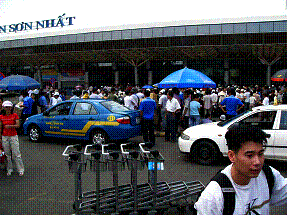 quonset huts by the runways, some with old Hueys without rotors, lots and lots
of motorbikes, and the sounds and smells of an Asian city.
That’s not a bad thing! Hot,
of course. The airport is very 60s
Russian style, but the new one that is being built … wow!
It will be the kind of airport that we see in Bangkok, Seoul, Singapore,
Hong Kong. What kind of future is
this country anticipating?
quonset huts by the runways, some with old Hueys without rotors, lots and lots
of motorbikes, and the sounds and smells of an Asian city.
That’s not a bad thing! Hot,
of course. The airport is very 60s
Russian style, but the new one that is being built … wow!
It will be the kind of airport that we see in Bangkok, Seoul, Singapore,
Hong Kong. What kind of future is
this country anticipating?
Driving through the city, more
and more motorbikes, shophouses, power lines, people,
people, people 
We were staying at the Asian
Hotel, a tourist hotel, but not at all fancy.
Good location, though. We
had our welcoming dinner at a Vietnamese restaurant.
This could have been the first and last time that the entire group would
be together. There was one subgroup
that was going up to Danang to give a donation to the landmine group (this
group, from Long Island, was centered around a man who had lost both of his legs
there). The food was good!
We had gone there after sitting at the rooftop bar at the Rex Hotel for
some libations.

GEORGE
DESERRES, GERRY SANDLIN
and
TOWNEY
SAUSVILLE
The Rex was where a lot of
the foreign news correspondents had spent time during the war.
We also had done some
preliminary shopping. There is lots
to buy, and the prices are amazingly cheap.
Our first scores were some laquerware and postcards.
We tried very hard to adapt
to the local time, going to bed at bedtime.
And then, waking up at wake up time!
Then breakfast for a kind of western breakfast …
One thing that we noticed, and this was confirmed throughout the entire
trip everywhere … the French left one great legacy – the bread!
They call it panne, and they are awesome little French loaves!
The butter is canned, mostly from Europe.
The next day (Wednesday) the
group split up. One part went on a
trip to the Delta (some of the vets on the tour had been stationed there, and
others were curious). The other,
including us, decided to stay in the city and see the sights there.
We started at the market at Cholan, the Chinese section of Saigon.
I had known a lot of people from that part of the city in Edmonton
(including Wendy Chau!), so I was interested in seeing it.
And yes, it was very much a very Chinese section, and the market, which
is a wholesale market, had just about everything that you would every want, and
more!
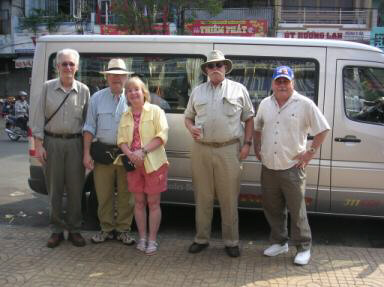
PHILL
CUMMINGS (179TH)
TOWNEY
SAUSVILLE, WENDY UNCLES,
GEORGE
DESERRES AND GERRY SANDLIN (189TH)

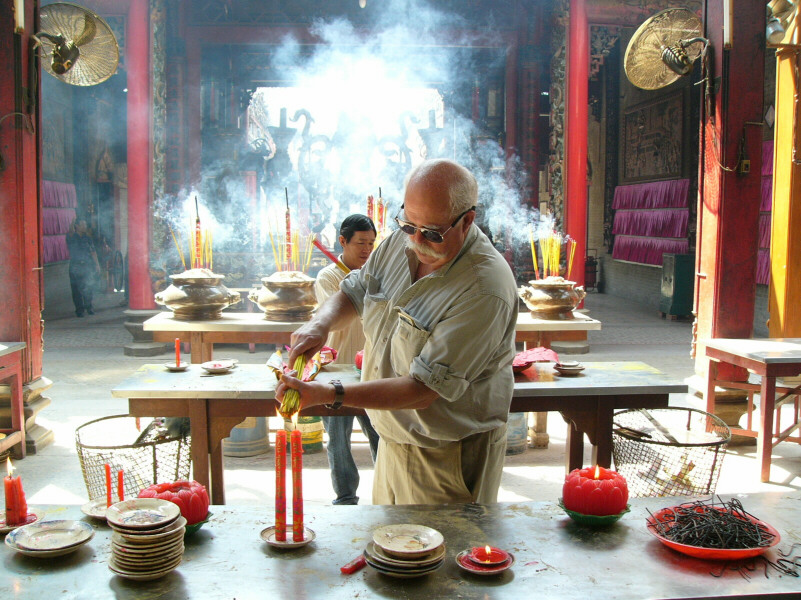
GEORGE
DESERRES
From there we visited three
religious sites, a Chinese temple (with the joss sticks and other offerings,
lots of incense), a Buddhist temple, and then a Daoist temple.
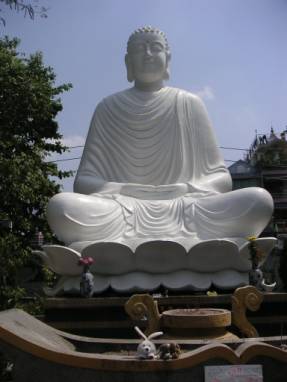 The latter was the busiest by a long shot.
And, one of the most interesting things was the turtles.
I gather that people bring offerings of turtles (other places have birds,
for example). There are lots of
turtles in the ponds by the entrance.
The latter was the busiest by a long shot.
And, one of the most interesting things was the turtles.
I gather that people bring offerings of turtles (other places have birds,
for example). There are lots of
turtles in the ponds by the entrance.

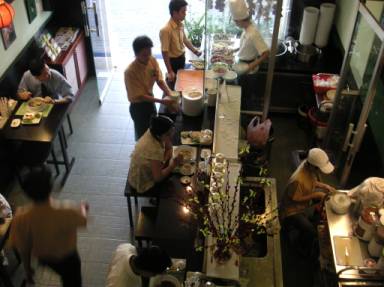
Lunch was our first
introduction to Pho, the Vietnamese national dish, I think, and certainly their
signature breakfast! It
is basically a very nice beef noodle soup with herbs and vegetables.
Yum!
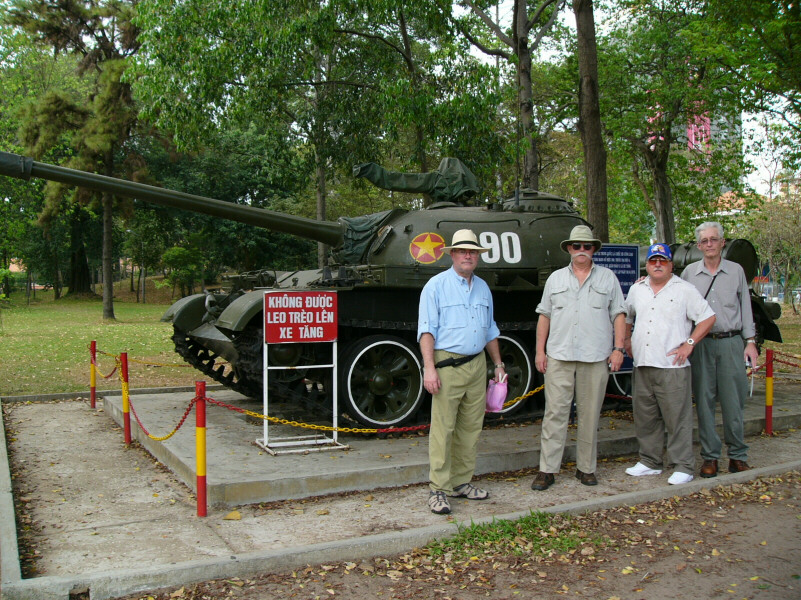
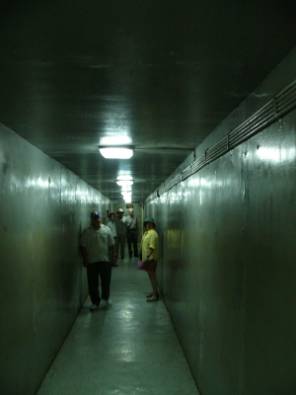
Our final tour stop was the Presidential
Palace, now the war museum. The
public rooms are all open, both to the air and to the public, all the way up to
the roof (4th floor, with a nice view of the city and a Huey) and
down to the basement where the war was choreographed.
Very 60s! No computers at
all!


Then we did some more shopping and ended up at
the Rex again, and had dinner there.
The next day we flew on Vietnam Air to Pleiku
(after a breakfast of Pho!).
Pleiku Airport (Old Pleiku Air Force Base)
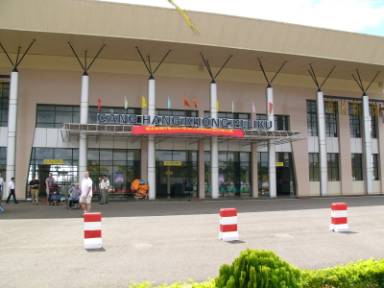
This was a homecoming of sorts for the rest of
the tour (I am the only woman the other one went off with her husband on their
one tour to Danang and Hue). We
checked into the Pleiku Hotel, a remnant of when the Russians came in after the
Americans left in 1973. One thing,
the satellite dish on the roof – we were told that it covered the whole town
– meant that we could get some English language TV, like CNN Europe and HBO!
And what of the town? Actually, a
city now, of over 300,000 people. In
a sense it was kind of like Saigon with store fronts, houses on top built up for
two or three stories, some new and colorful.
There are no windows on the sides. They
are very narrow, maybe one room wide, probably to fit city lots (but later we
saw lots of them of the same design in the country where there weren’t urban
space restrictions).
After a very elaborate lunch, we went for a
little walk around the town. Definitely
not as urban as Saigon. Lots and
lots of motorbikes, but not nearly the big vehicle traffic.
Crossing the street was must easier.
No English spoken. The
people were mostly friendly, waving and smiling and “Hello”.
We got onto our great big coach for the
afternoon sightseeing tour. It took
us to places from the past. Camp
Enari was the first stop. We
stopped for a photo op at what was the guard gate.
Then we went to see where the landing strip was.
They think they found it – right now it is flat and smooth and they are
drying coffee on it.
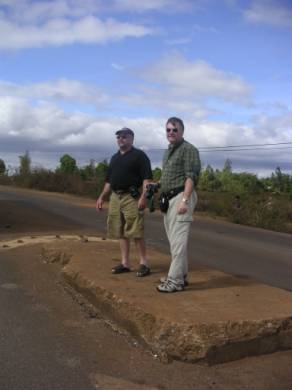
JOE,
SOTTILE (189TH/57TH AHC & TOWNEY
SAUSVILLE 189TH AHC
Entrance
to Camp Enarie

CAMP
ENARI AIRFIELD
Camp Holloway is gone. Drove by where it
was, but now it is occupied by the Vietnamese military.
We couldn’t even stop to take pictures.
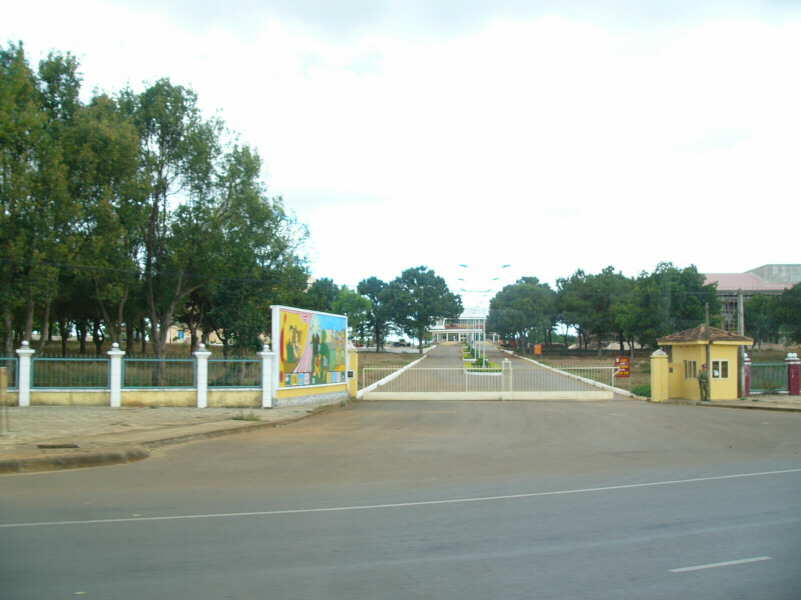
Camp Holloway 2006
but we got a few.
(now don't tell).
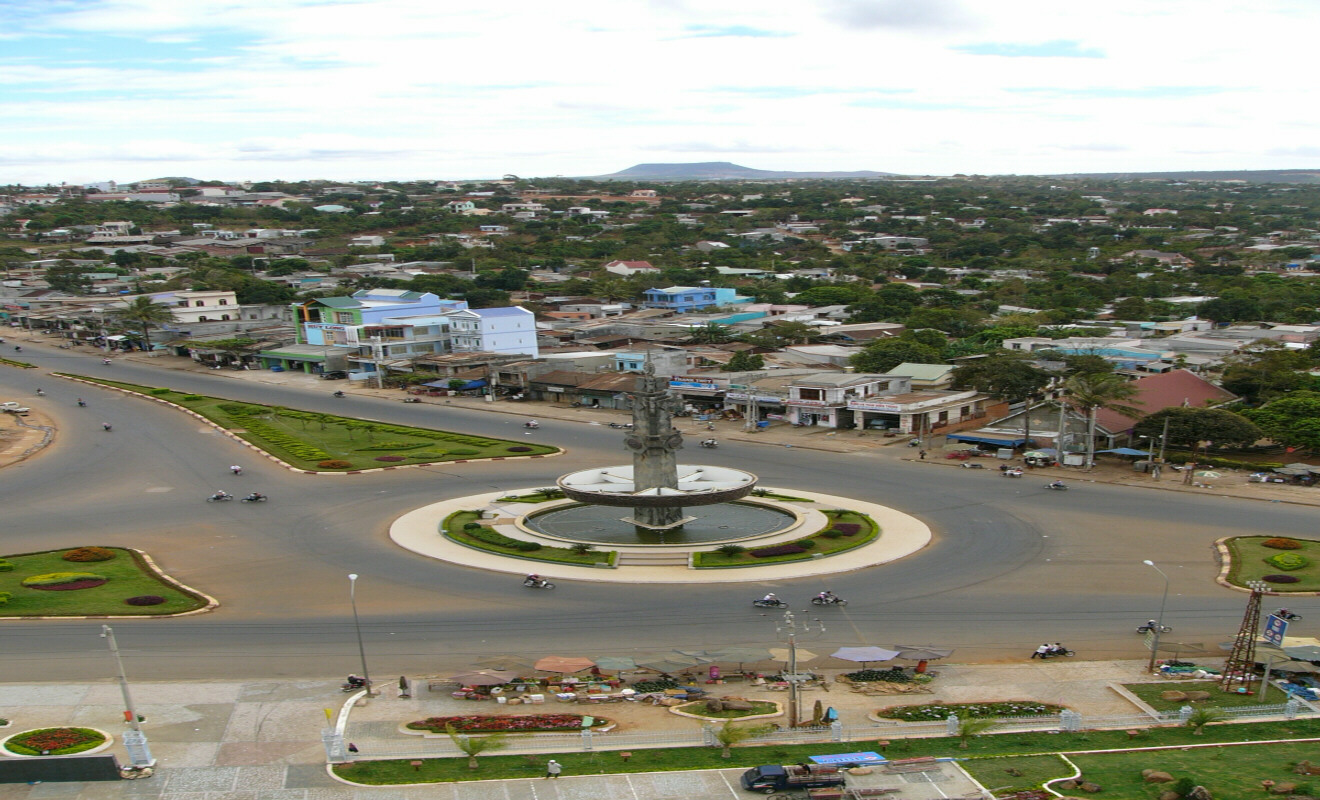
Looking out over Pleiku and the new traffic
circle.
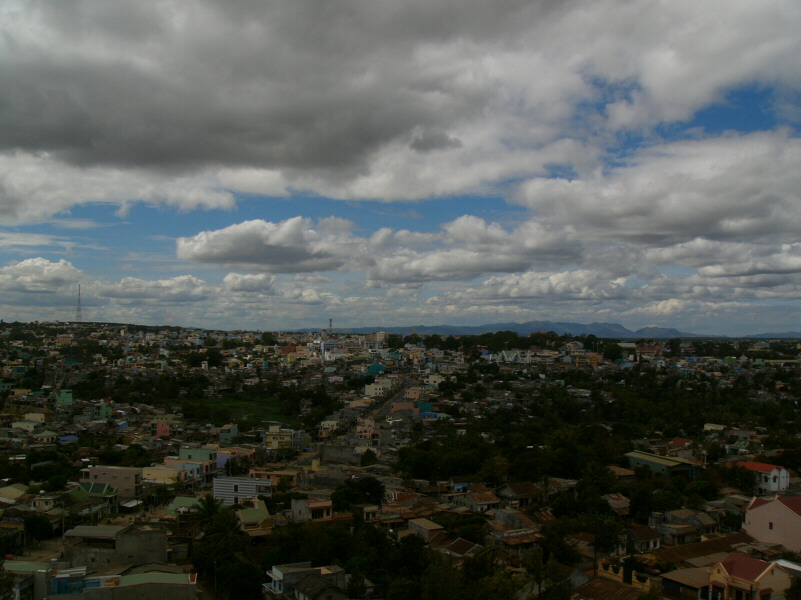
Looking out over Pleiku at night,

The next day (Friday?) after a great Pho
breakfast (and buffet with all of the other stuff) we went out to see one of the
local Montegnard villages. Our
local guide came from one of the villages, but he managed to get to University
of Michigan for a couple of years. The
place where we were was called the Plei Phun Village (plei means “village”,
I was told).
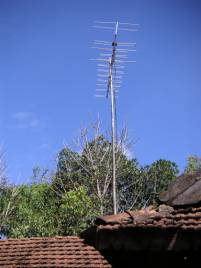
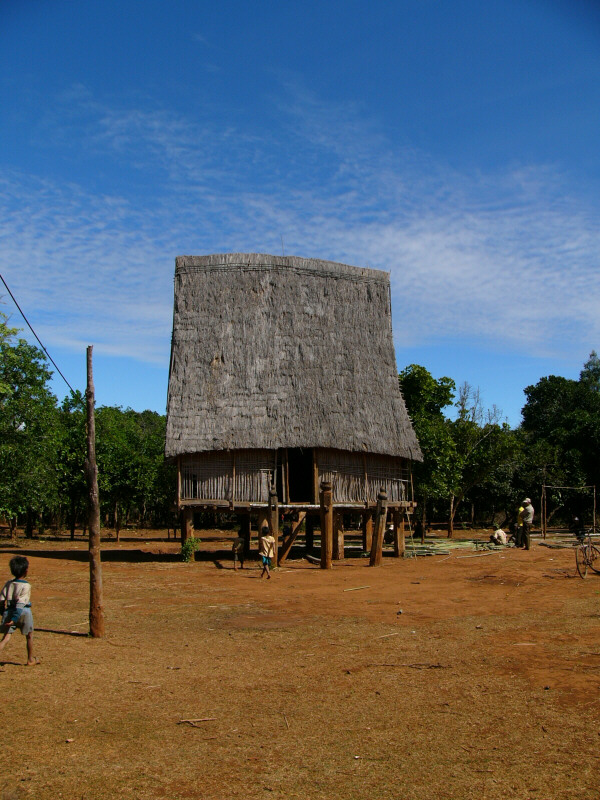
This was in an area that Towney and the guys
knew well. We walked in, looked at
some of the structures, visited the chief’s house (traditional, but with the
tv antenna on the roof), and then walked to the burial ground.
There were gorgeous views of a valley with ride paddies, a river,
mountains – spectacular. Towney
recognized a place where he had landed his helicopter when supplying the troops
with Thanksgiving dinner in 1969. That
was moving.
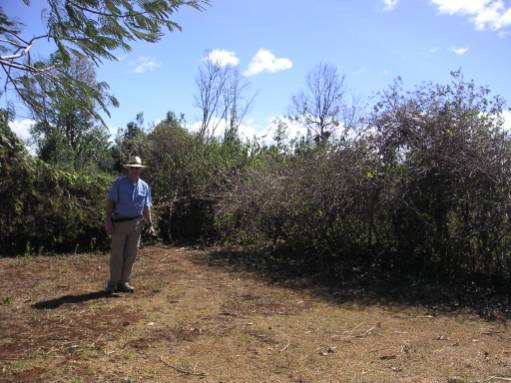
Then we went back to town and had a really nice lunch at a place with great
views of rice paddies. Then we
stopped by the newest luxury hotel in town – 13 stories!
A chance for some pictures of the area where Holloway was for, the cost
of a Tiger beer or two.
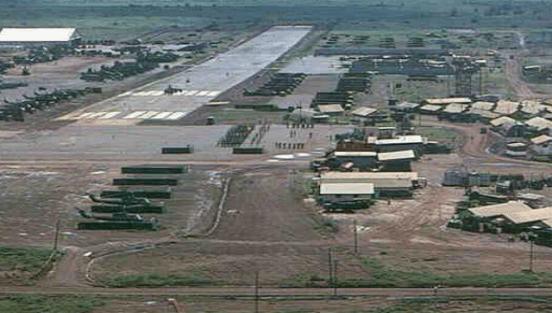
Camp Holloway
1969
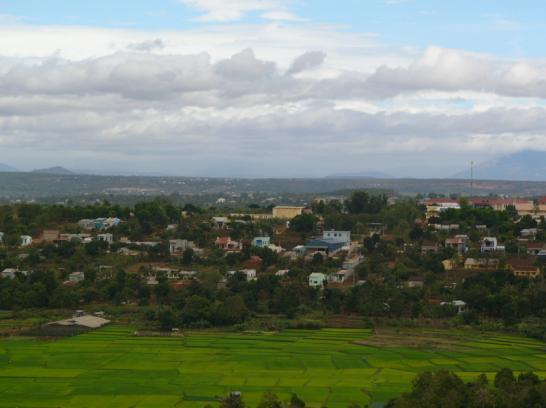
Camp Holloway 2006
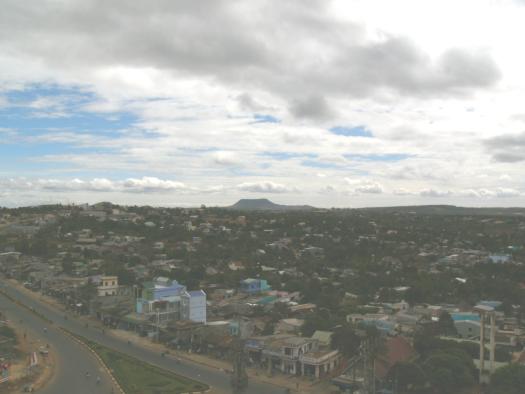
Looking south to
Dragon Mountain.
Later we went to another village for a show of
local dancing. The ceremonies included drinking some of the local rice
brew.
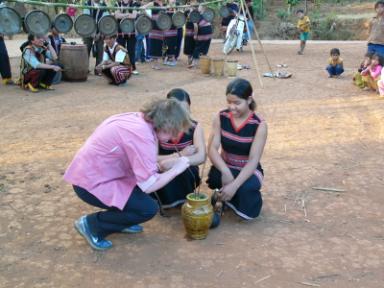
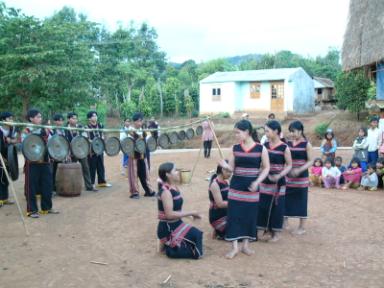
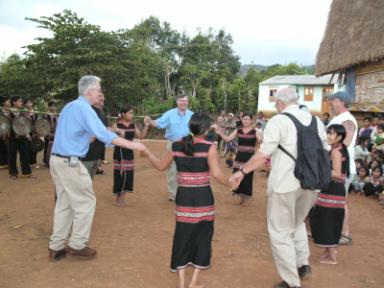
They even made us dance…
ReturnTo Vietnam 2006 Page 2
189th Home Page